
Closing Is Not a Moment: The Four Closes That Match the Four Personality Types

Dr. Rick Ruperto, Architect of Anti-Manipulative Sales Systems at Rick Ruperto LLC. The Predictable Sales Method.

“The close begins long before you ask for the order.”
That principle separates predictable sales professionals from hopeful ones.
If you wait until the final minutes of a sales conversation to discover whether your prospect trusts you, believes in the offer, sees the value, and feels ready to act, you are not closing. You are gambling.
The strongest closing techniques in sales are not pressure tactics. They are calibrated commitments built throughout the conversation. Each question, explanation, objection response, and summary should move the buyer toward greater certainty.
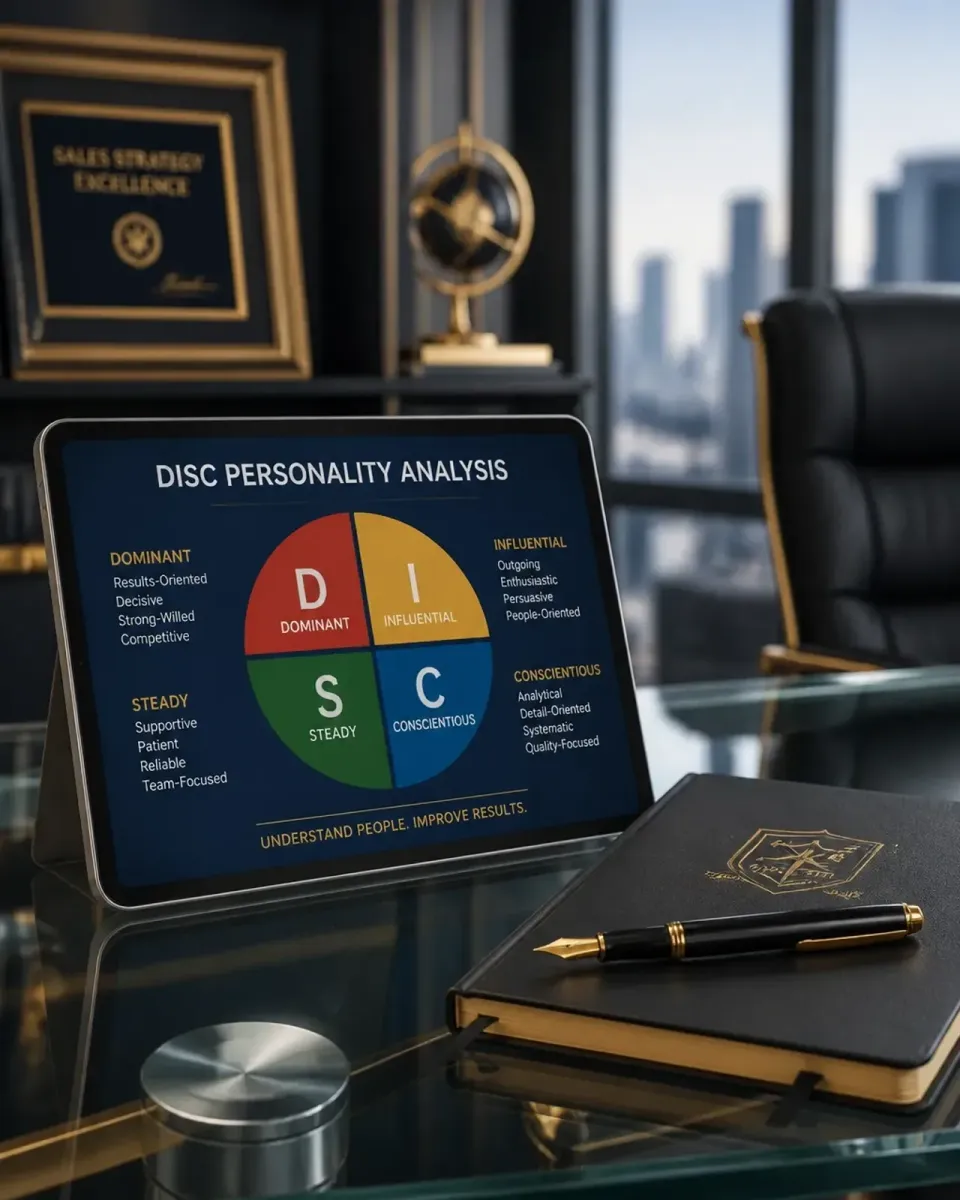
The four DISC personality types require different forms of that calibration:
- D, Dominance: certainty through speed, control, and measurable outcomes.
- I, Influence: certainty through energy, connection, and possibility.
- S, Steadiness: certainty through safety, support, and stability.
- C, Conscientiousness: certainty through evidence, structure, and risk control.
The decision is still theirs. Your responsibility is to communicate in a way that allows the right buyer to make a confident decision without manipulation.
THE REAL CLOSE IS CONTINUOUS CALIBRATION
The Predictable Sales Method does not teach “always be closing” in the traditional sense. It teaches you to always be advancing.
Every stage of the 11-Step Predictable Sales Model has a commitment objective. Sometimes that objective is a candid answer. Sometimes it is a scheduled next step. Sometimes it is a completed presentation, an answered objection, or a final decision.
The 11 steps create the structure:
- Win the first four seconds.
- Create curiosity.
- Gather intelligence.
- Declare certainty.
- Deliver the first presentation.
- Ask for the order.
- Deflect the objection.
- Loop into the second presentation.
- Rebut the objection.
- Build emotional certainty.
- Close or lower the action threshold.
The close appears more than once because certainty develops in layers.
That is where the 5 Pillars of Certainty become essential:
- The Seller: Can the buyer trust you?
- The Buyer: Do you understand their situation?
- The Product: Will the solution work?
- The Price: Is the investment worth it?
- The Timing: Is now the right time to act?
Your DISC adaptation determines how you build certainty across those five pillars.
CLOSE ONE: THE D-TYPE NEEDS DECISIVE OUTCOMES
A D-style buyer wants progress. They are usually focused on results, speed, authority, and competitive advantage. Long explanations, unnecessary background, and tentative language weaken your position.
This does not mean you should dominate the conversation. It means you should respect their time and give them a clear path to a decision.
What a D-type needs to say yes
- A measurable business outcome.
- A direct explanation of the next step.
- Control over the final choice.
- Confidence that implementation will move quickly.
- Evidence that delay has a cost.
The D close should be concise, firm, and outcome-focused.
Word-for-word D close
“Here is the bottom line. Based on what you told me, the primary issue is costing you more than the investment required to solve it. We can begin implementation on the 15th or the 22nd. Which start date gives you the stronger advantage?”
If the D-type raises an objection, do not rush into defense. Diagnose the pillar.
“Understood. Is the concern the expected result, the implementation timeline, or the investment?”
This gives the buyer control while keeping the conversation precise.
Coaching prompt for D prospects
Ask yourself:
“Have I made the result and the next action clear enough for a decisive buyer to move?”
If the answer is no, remove unnecessary detail and return to the measurable outcome.
CLOSE TWO: THE I-TYPE NEEDS EMOTIONAL MOMENTUM
An I-style buyer often decides through connection, energy, vision, and enthusiasm. They want to understand what the decision will make possible for themselves, their team, or their customers.
A dry, overly technical presentation can make a strong offer feel lifeless. The I-type needs to experience the future, not simply analyze the features.
What an I-type needs to say yes
- A compelling vision of the outcome.
- Confidence in the relationship.
- Social proof or a relevant success story.
- Enthusiasm for the experience of working together.
- A sense of momentum.
The I close should sound human, optimistic, and collaborative.
Word-for-word I close
“You have described a future where your team is more confident, your clients feel better supported, and your growth is no longer dependent on improvisation. I am excited about what we can build together. On a scale from one to ten, how ready do you feel to begin?”
If they answer with a seven or eight, do not pressure them toward ten.
Ask:
“What would need to become clearer for this to feel like a confident ten?”
That question is powerful because it turns enthusiasm into useful information. It may reveal a concern about the seller, the offer, the price, or the timing.
Coaching prompt for I prospects
Ask yourself:
“Have I connected the decision to a meaningful future, or have I simply described a service?”
The I-type does not need empty hype. They need a credible, emotionally relevant picture of progress.
CLOSE THREE: THE S-TYPE NEEDS SAFETY AND SUPPORT
S-style buyers tend to value trust, consistency, cooperation, and stability. They may be concerned about disruption, internal resistance, or the effect of change on other people.
A high-pressure close can create resistance even when the offer is a strong fit. The right approach is calm, patient, and structured.
What an S-type needs to say yes
- A predictable implementation process.
- Reassurance that support will continue after the sale.
- Time to prepare their team.
- A low-risk path forward.
- Confidence that their concerns are welcome.
The S close should reduce uncertainty without manufacturing urgency.
Word-for-word S close
“You do not need to force a decision today. My priority is helping you understand what implementation would look like and whether it feels appropriate for your team. If we begin with a clearly defined first phase, provide onboarding support, and review progress together, would that feel like a manageable next step?”
If the buyer says they need to speak with others, respond with patience and leadership:
“That makes sense. Who else should feel comfortable with this decision, and what information would help them evaluate it properly?”
This is not a retreat from closing. It is a strategic advancement toward the correct commitment objective.
Coaching prompt for S prospects
Ask yourself:
“Have I made the next step feel safe, manageable, and supported?”
The S-type does not need less certainty. They need certainty delivered without pressure.

CLOSE FOUR: THE C-TYPE NEEDS EVIDENCE AND CONTROL
C-style buyers are analytical, detail-oriented, and attentive to accuracy. They often want to understand the criteria, assumptions, risks, timeline, and expected result before committing.
The mistake many salespeople make is interpreting questions as resistance. For a C-type, detailed questions are often the path to certainty.
What a C-type needs to say yes
- A logical summary of the problem.
- Specific criteria for success.
- Supporting evidence.
- Clear implementation details.
- Transparent pricing and risk controls.
The C close should be precise and reviewable.
Word-for-word C close
“Let us summarize the decision against the criteria you identified. The solution addresses the three operational issues we discussed, the implementation timeline is six weeks, the investment is clearly outlined, and the first review point is scheduled for day 30. What information is still missing before you can determine whether this meets your requirements?”
If the buyer needs more time, give the time a structure:
“I will send the proposal with the scope, assumptions, timeline, pricing, and review process. After you have evaluated it, would Thursday at 2:00 p.m. be a reasonable time to confirm whether it meets your criteria?”
That is not artificial urgency. It is a professional decision process.
Coaching prompt for C prospects
Ask yourself:
“Have I provided enough precision for this buyer to evaluate the decision without guessing?”
If not, clarify the facts. Do not compensate with louder enthusiasm.
HOW TO USE THE FOUR CLOSES INSIDE THE 11-STEP MODEL
DISC should not appear only at the end of the conversation. It should shape your communication from intelligence gathering through the final decision.
During Step 3, Intelligence Gathering, listen for behavioral clues:
- D-types ask about results, speed, and control.
- I-types discuss people, possibilities, and energy.
- S-types ask about support, impact, and stability.
- C-types request details, proof, and process.
During Step 4, Declaration of Certainty, adapt your authority:
- For D, be direct.
- For I, be confident and engaging.
- For S, be reassuring.
- For C, be precise and evidence-based.
During Steps 6, 8, 10, and 11, calibrate instead of repeating the same close. If the buyer is not ready, identify which Pillar of Certainty needs more work.
That is the anti-manipulative distinction. You are not forcing a yes. You are diagnosing what remains unclear.
THE FINAL STANDARD: CERTAINTY WITHOUT PRESSURE
A strong close does not corner a buyer. It clarifies a decision.
When the 5 Pillars of Certainty are strong and your communication matches the buyer’s DISC style, closing becomes more natural. You are no longer searching for a magic phrase. You are applying psychology of selling techniques inside a reliable structure.
Use these sales scripts for business as starting points, then make them sound like you. The framework should support your authenticity, not replace it.
Start calibrating your next conversation now. Before your next call, write down three things:
- Which DISC style is most visible?
- Which Pillar of Certainty is weakest?
- Which commitment objective should you advance next?
For deeper guidance, explore The Predictable Sales Method training programs, review Dr. Rick Ruperto’s approach to trust-based sales, or book a 15-minute strategy session to refine your closing process.
The right close is not a moment at the end.
It is the result of making the right decision easier to understand at every stage.