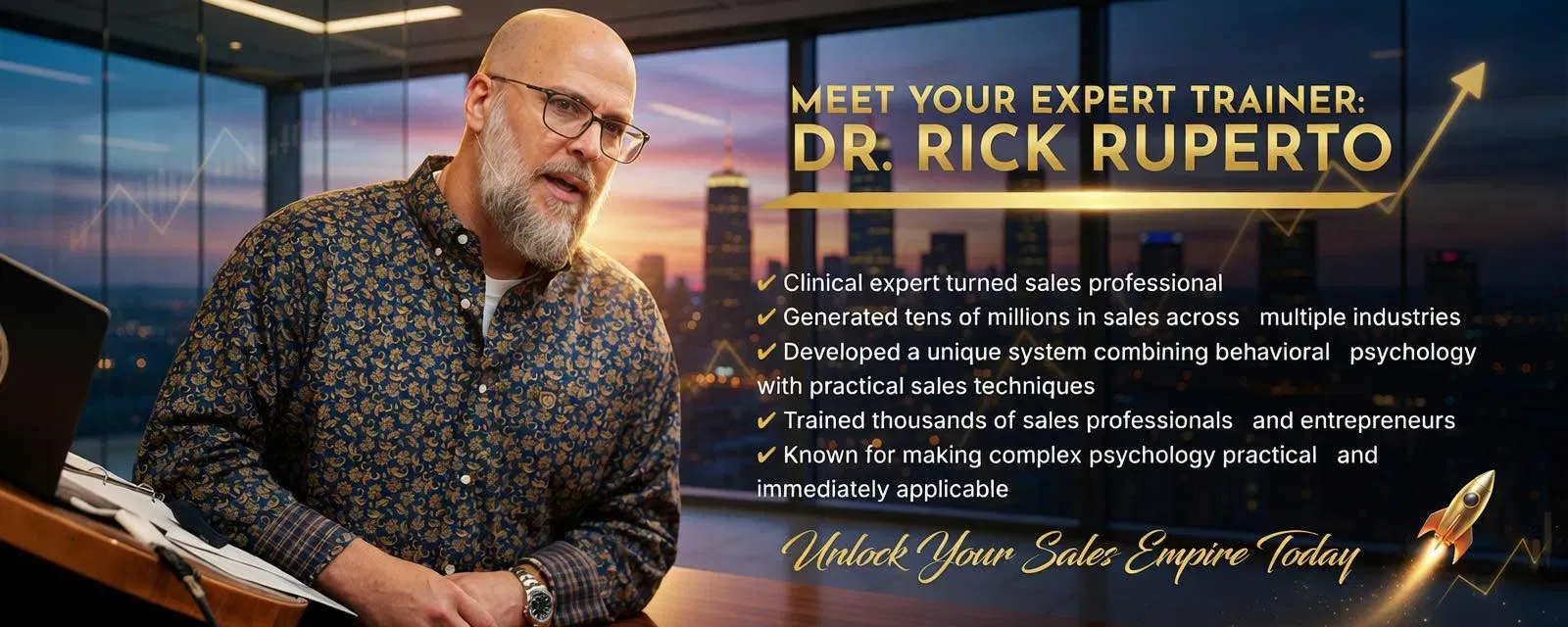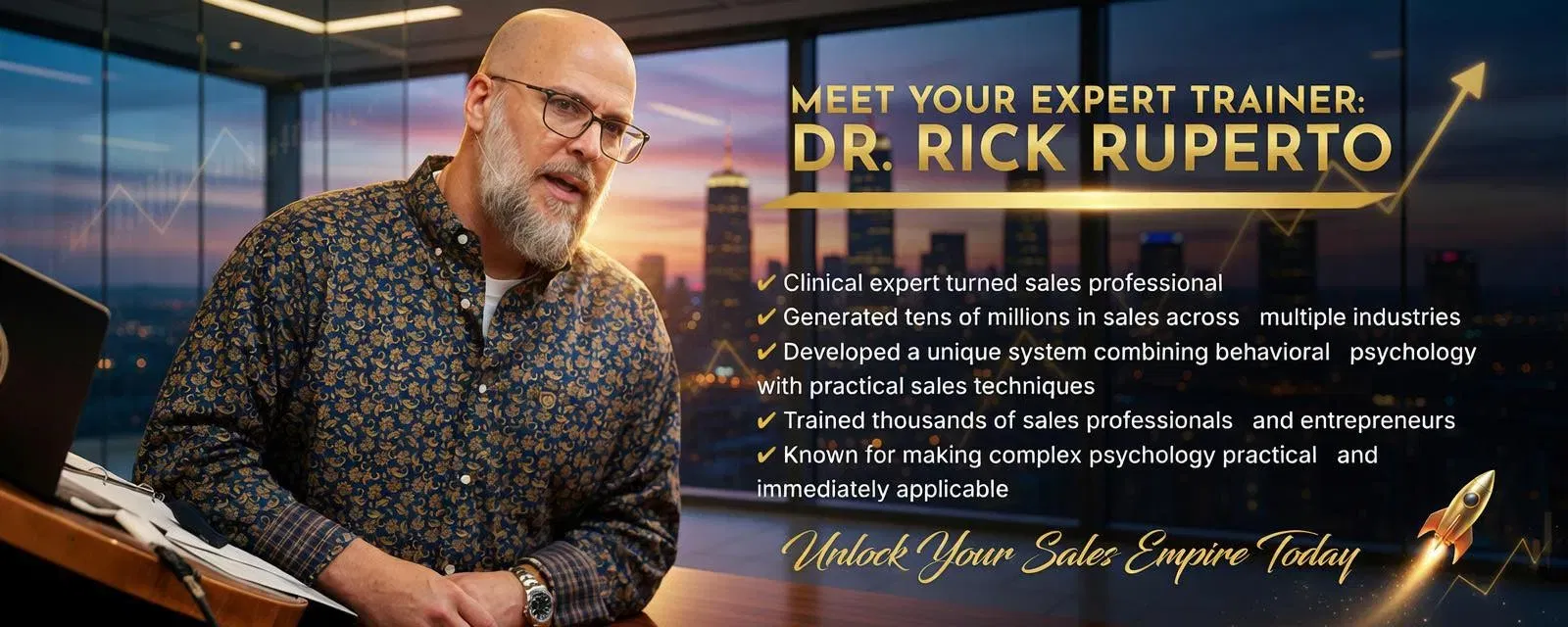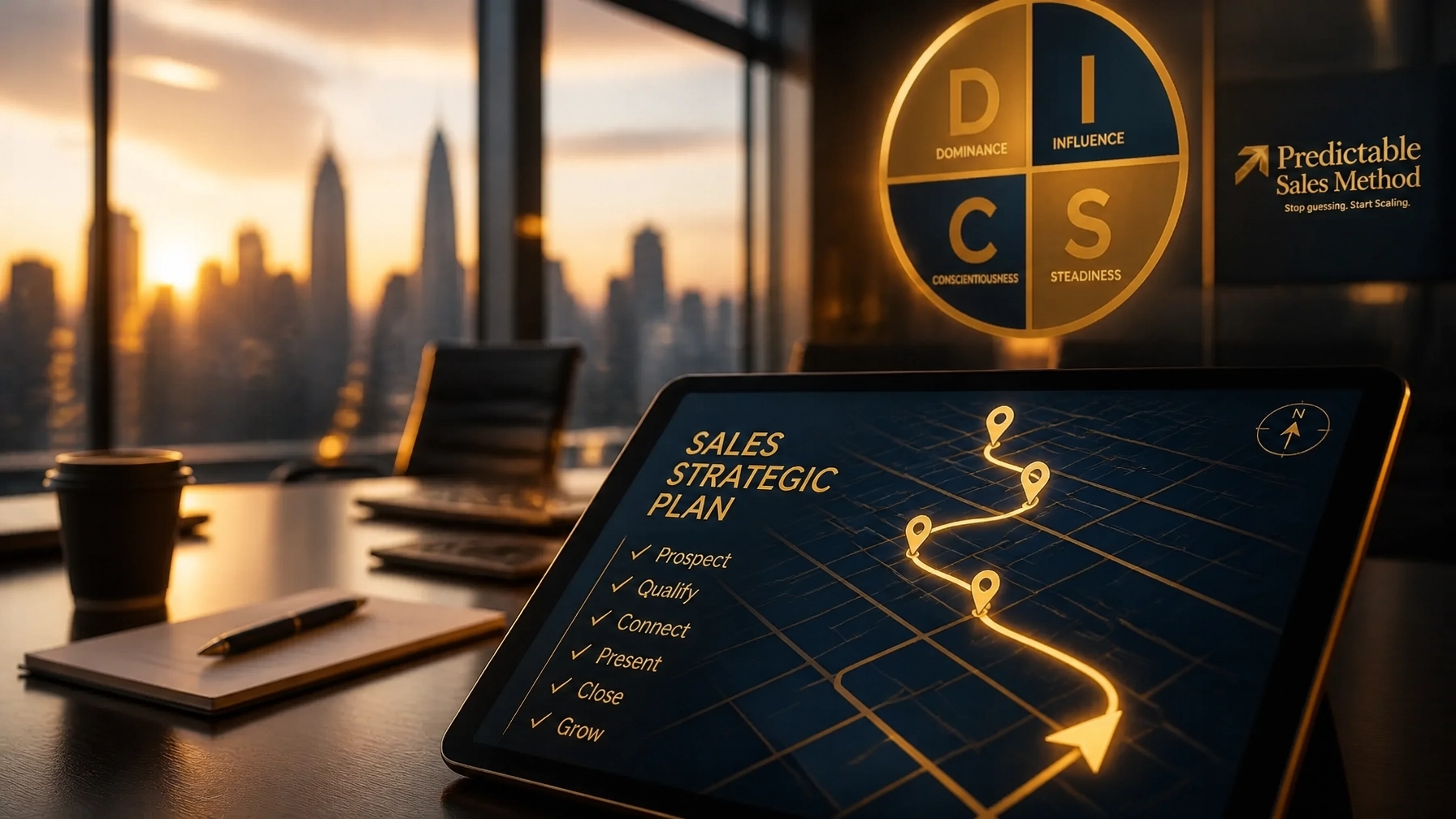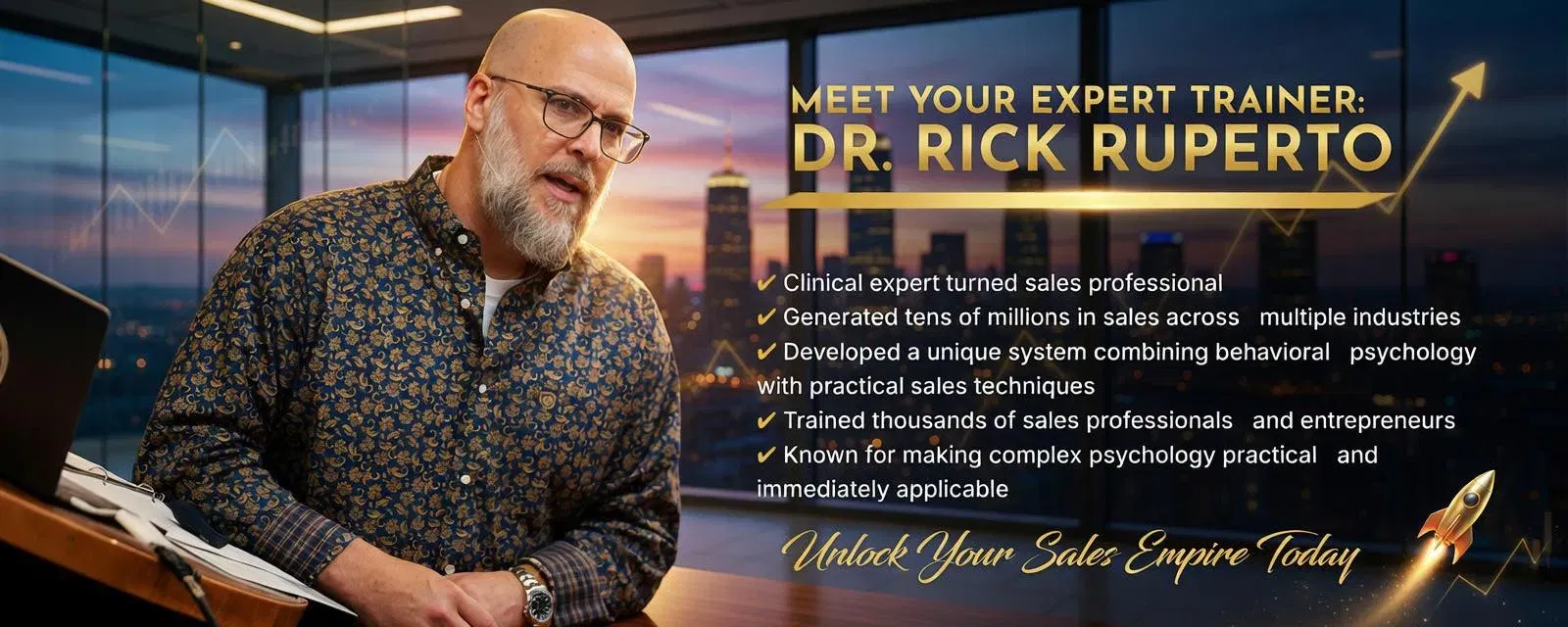

Forbes Business Development Council Member

Author: predictablesalesmethod

  • The Originator Position: How to Take Control of Any Sales Conversation

    The Originator Position: How to Take Control of Any Sales Conversation

    In every sales interaction, a silent battle for dominance occurs within the first sixty seconds. One person will lead, and the other will follow. One person will set the agenda, and the other will react to it. One person is the Originator, and the other is the Responder.

    If you find yourself constantly defending your price, justifying your methodology, or chasing prospects who "need to think about it," you have fallen into the Responder Position. You are no longer a professional consultant; you are a victim of the prospect’s whims.

    At The Predictable Sales Method, we teach a revolutionary approach to sales mastery that demands you take: and keep: the Originator Position. This isn't about being "pushy" or "aggressive." It is about precision leadership. It is about using psychology-backed techniques to guide the prospect toward the solution they desperately need.

    Stop guessing. Start leading. It is time to unlock the secret to absolute conversational control.


    THE RESPONDER TRAP: WHY YOU ARE LOSING SALES

    Most sales professionals operate in a state of perpetual reaction. They wait for the prospect to ask a question, then they scramble to provide an answer. They allow the prospect to dictate the timeline, the budget, and the flow of information.

    This is the Responder Position, and it is a recipe for low close rates and inconsistent income. When you respond, you concede your authority. You signal to the prospect that they are the expert and you are merely a vendor.

    THE REVOLUTIONARY SHIFT: The Originator Position is the polar opposite. As the Originator, you are the person who controls the conversation. You don't just answer questions, you frame the environment in which those questions are asked. You dictate the pace, the tone, and the structure of the engagement.

    A professional sales trainer leading a high-stakes board meeting during golden hour, demonstrating the Originator Position


    PILLAR 1: ESTABLISHING INSTANT AUTHORITY

    To maintain the Originator Position, you must first establish yourself as the primary authority in the room. This is the foundation of the Predictable Sales Method. We refer to this as Pillar 1: The Seller.

    Establishing authority isn't about bragging; it’s about prescriptive confidence. You must demonstrate that you have the expertise, the data, and the systematic approach to solve the prospect’s problem better than anyone else on the planet.

    For example, a Responder might say: "I've done this for a few years and I think we can help you."
    An Originator says: "I have 15 years of specialized experience in this field, and I’ve maintained a 98.7% success rate across 500+ implementations. I’ve prepared a comprehensive overview to walk you through our process systematically. Does this approach align with your objectives?"

    One is a plea for business. The other is a Declaration of Certainty.


    THE DISC CONTROL FRAMEWORK: ADAPTING THE DELIVERY

    The most common mistake sales leaders make is assuming "control" looks the same for everyone. If you try to dominate a "Steady" personality type with the same intensity you use for a "Dominant" type, you will lose the sale instantly.

    True mastery lies in maintaining the Originator Position while adapting your delivery to the prospect’s DISC temperament. You are always in control, but the frequency of that control changes.

    1. D-TYPES: BE DIRECT

    D-Types (Dominant) respect power and efficiency. They have no time for small talk or fluff. To be the Originator with a D, you must match their speed and be incredibly direct.

    • The Originator Move: "Here is what I need to know. Let's cover these three key areas, and then I will outline the next steps. Does that work for you?"
    • Why it works: D’s respect direct control. If you show any sign of uncertainty, they will steamroll you into the Responder Position.

    2. I-TYPES: GUIDE WITH ENTHUSIASM

    I-Types (Influential) buy on excitement, vision, and social proof. If you are too rigid or clinical, they will disengage.

    • The Originator Move: "I’m excited to explore these possibilities with you! Let’s discover together how this will transform your team. Here is what would be fun to look at next."
    • Why it works: I’s follow enthusiastic leadership. You are leading the "fun," but you are still the one holding the map.

    3. S-TYPES: LEAD GENTLY

    S-Types (Steady) value security, sincerity, and support. They are the slowest to decide because they fear making a mistake that hurts their team.

    • The Originator Move: "What I’d like to do is walk you through this slowly. I’ll guide you through each stage to ensure you feel completely supported. Here is how we will proceed."
    • Why it works: S’s follow supportive guidance. By taking the lead gently, you remove the pressure and risk from their shoulders.

    4. C-TYPES: USE LOGICAL STRUCTURE

    C-Types (Conscientious) need data, precision, and a proven methodology. They are fact-checkers who despise hype.

    • The Originator Move: "First, we will review the data. Second, we will analyze the technical specifications. Third, I will provide the framework for our implementation. Here is our systematic process for today."
    • Why it works: C’s follow systematic leadership. When you provide a logical structure, they trust your expertise and allow you to lead the process.

    Sales professionals collaborating in a boardroom using DISC personality traits to analyze data


    THE ORIGINATOR’S SECRET WEAPON: TONALITY

    It isn't just what you say, it’s how you say it. To stay in the Originator Position, you must master the "Authority Tonality." This is a voice of absolute certainty: a downward inflection at the end of your sentences that signals you are the expert in the room.

    • For D's and C's: Use the Authority and Reasonable Man tonalities. They respect competence and logic.
    • For I's and S's: Use the Enthusiasm and Sincerity tonalities. They need to feel connected and safe.

    When you pair the right words with the right tonality, the prospect naturally relaxes. They realize they don't have to "drive" the conversation anymore because a professional has taken the wheel.


    ELIMINATING THE RESPONDER TRAP

    To become a high-six-figure or seven-figure earner, you must eliminate the habits that force you into the Responder Position.

    1. Stop Asking for Permission: Instead of asking, "Is it okay if we start now?" say, "Let’s get started."
    2. Stop Over-Explaining: If you spend thirty minutes justifying your price, you are in the Responder Position. State your investment with certainty and move to the next step.
    3. Control the Intelligence Gathering: Don't let the prospect interview you. You are the doctor; they are the patient. You must ask the questions to diagnose the problem before you can prescribe the solution.

    Dr. Rick Ruperto presenting his unique sales methodology in a modern office at dusk


    TAKE CONTROL OF YOUR SALES CAREER NOW

    The Originator Position is not a "tactic." It is a fundamental shift in how you view yourself and your value in the marketplace. By mastering the 11-Step Predictable Sales Model and the DISC Personality System, you move away from the guesswork and anxiety of "traditional" selling and into a world of predictable, repeatable income.

    Are you ready to stop reacting and start leading?

    UNLOCK YOUR POTENTIAL: Join our Live Weekly Mentoring sessions with Dr. Rick Ruperto and gain access to the word-for-word scripts and psychology-backed frameworks that are transforming sales professionals across 173 countries.

    NEW DOMAIN. SAME PRECISION SYSTEM: Visit PredictableSalesMethod.com now to access the latest training, mentoring, and sales mastery resources.

    SKIP THE GUESSWORK. MASTER THE METHOD. SECURE THE CLOSE.

    A confident businesswoman representing the success gained from the Predictable Sales Method

  • 7 Mistakes You’re Making with Sales Objections and How to Fix Them with Certainty Pillars

    7 Mistakes You’re Making with Sales Objections and How to Fix Them with Certainty Pillars

    Most sales professionals treat objections like a boxing match. When a prospect says "it is too expensive" or "I need to think about it," the average salesperson puts their gloves up and starts swinging. They throw out rebuttals, discount their prices, or try to overwhelm the buyer with logic. This is a massive tactical error that kills your close rate and destroys your authority.

    At The Predictable Sales Method, we teach a different approach. Objections are not roadblocks. They are diagnostic signals. They tell you exactly where your prospect lacks certainty. If you want to master the psychology of selling techniques, you must stop fighting and start diagnosing.

    Unlock the secret to professional selling by avoiding these seven critical mistakes. Learn how to use our proprietary Certainty Pillars to transform every "no" into a pathway for a "yes."

    1. Fighting the Objection Instead of Deflecting

    The moment you argue with a prospect, you trigger their natural "sales resistance." If they say your price is high and you immediately explain why it is fair, you have entered a power struggle. You have become an adversary rather than a trusted advisor.

    The fix is simple. Use the Deflection step. Acknowledge their concern with a calm, curious tone. Use a "Doctor Persona" to investigate the root cause. Instead of defending your price, ask, "I hear you. When you say it is expensive, what are you comparing that to?" This lowers their guard and allows you to dig into the real issue.

    2. Treating Symptoms Instead of the Root Cause

    Most salespeople treat "I need to talk to my partner" as a timing or authority issue. In reality, this is often a smoke screen for a lack of trust in the seller or the product. If you do not understand our Five Certainty Pillars, you are just guessing.

    Our sales mastery system categorizes every objection into one of five areas:

    • The Seller: Do they trust you personally?
    • The Buyer: Do they believe they can actually implement the solution?
    • The Product: Do they believe your specific solution works for them?
    • The Price: Is the perceived value higher than the cost?
    • The Timing: Is there a compelling reason to act now?

    If you try to fix a Pillar 1 (Seller) problem with a Pillar 4 (Price) solution, you will lose the deal every single time.

    Sales professional presenting data-driven strategies to a client in a professional office setting, emphasizing the use of diagnostic tools and structured sales frameworks

    3. Ignoring the DISC Personality System

    Using the same sales scripts for business for every prospect is a recipe for failure. A high-D (Dominant) executive wants bottom-line results and speed. They do not care about your life story. A high-S (Steadiness) buyer needs to know they will be supported and that the change won't be chaotic.

    If you hit a high-S buyer with aggressive closing techniques sales tactics, you will scare them away. You must tailor your objection handling to their DISC profile.

    • Dominance: Focus on ROI and competitive edge.
    • Influence: Focus on social proof and enthusiasm.
    • Steadiness: Focus on safety, step-by-step implementation, and support.
    • Conscientiousness: Focus on data, logic, and meticulous detail.

    4. Falling into the 8/10 Certainty Trap

    One of the most dangerous mistakes is pushing for a close when a prospect is at a 7 or 8 on the certainty scale. We call this the "Action Threshold." Most buyers at this level are paralyzed by the all or nothing nature of the deal. They are interested, but the risk still feels too high.

    At The Predictable Sales Method, we follow the 9.5 Rule. Never go for the full close unless the prospect is at a 9.5 or higher. If they are stuck at an 8, do not keep pushing the same offer. Instead, Lower the Action Threshold. Offer a pilot program, a smaller initial step, or a trial. This reduces the perceived risk and moves them toward a "yes" without triggering a flight response.

    5. Neglecting the Buyer’s Self-Certainty

    You can have the best product in the world, but if the buyer doesn't believe they can make it work, they won't buy. This is a failure in the Buyer Pillar. Many sales professionals spend all their time talking about features and "The Product," forgetting that the buyer is often scared of their own ability to change.

    To fix this, you must build their confidence. Use your sales scripts for business to walk them through the implementation process. Show them exactly how easy it is to start. When they feel certain in their own ability to succeed with your help, the objection disappears.

    Four professionals collaborating at a boardroom table with DISC charts in the background, demonstrating the integration of personality types into sales strategy

    6. Failing to Build Emotional Certainty

    Logic opens the mind, but emotion closes the deal. Many salespeople rely too heavily on "The Four Corners" of their presentation, the logical facts. While logic is necessary, it is rarely sufficient.

    You must use "looping" to go back through your process and rebuild emotional certainty. If you detect a gap, loop back to the discovery phase. Re-agitate the pain they are feeling in their current situation. Remind them of the cost of staying the same. When the emotional pain of the status quo outweighs the emotional fear of change, you have built the certainty required to close.

    7. Talking Too Much After the Objection

    Silence is your most powerful weapon. When a prospect raises an objection, many salespeople feel the need to fill the air with words. They over-explain and end up talking themselves out of the sale.

    Stop talking. State your diagnostic question and wait. Let the prospect process. Often, they will answer their own objection if you give them the space to do so. This is a core component of high-level psychology of selling techniques. Command the room with your presence, not just your voice.

    Dr. Rick Ruperto in a modern office, symbolizing expert mentorship and the authority of the Predictable Sales Method

    Master the Science of the Close

    Sales is not a game of luck. It is a precise, repeatable science. When you stop guessing and start using a structured sales mastery system, your results become predictable.

    By mastering the Five Certainty Pillars and the DISC system, you move from being a "vendor" to a "strategic partner." You no longer fear objections because you know exactly what they mean and how to fix them.

    Start Understanding the psychology behind every "no." Master the art of the 9.5 Rule. Get Your Sales Mastery System today and transform your income forever.

    Skip Ahead of the competition. The world of sales has changed. Are you ready to lead it?


  • Handling the ‘Too Expensive’ Objection: A DISC-Based Guide to Pricing Power

    Handling the ‘Too Expensive’ Objection: A DISC-Based Guide to Pricing Power

    "It’s too expensive."

    In the world of professional sales, those four words are often treated as a death sentence for a deal. But here is the reality that elite closers understand: A price objection is never actually about the price.

    It is a symptom of a failure in one of the three foundational pillars that precede it. If your prospect is balking at the investment, you haven’t failed at Pillar 4 (The Price); you have a leak in Pillar 1 (The Seller), Pillar 2 (The Buyer), or Pillar 3 (The Product).

    At The Predictable Sales Method, we teach that price is entirely relative to value. A $50,000 investment feels cheap when the perceived value is $500,000. It feels extortionate when the perceived value is $30,000. To master the close, you must stop justifying your cost and start building Precision Value based on the specific psychological profile of the person sitting across from you.


    THE ARCHITECTURE OF PILLAR 4: WHY PRICE IS SYMPTOMATIC

    Before you can handle a price objection, you must diagnose which of the previous pillars is failing.

    1. Pillar 1 (The Seller): If they don’t view you as the ultimate authority, your price is just a number they can negotiate.
    2. Pillar 2 (The Buyer): If you haven’t quantified the true "Cost of Inaction," they don’t feel the pain enough to pay for the cure.
    3. Pillar 3 (The Product): If they don’t believe your specific solution solves their specific problem, any price is too high.

    Once these pillars are secured, the "Price" conversation becomes a logical next step, but only if you speak the language of their DISC temperament.


    1. THE DOMINANT "D": THE ROI BATTLE

    Confident sales leader in a focused consultation

    For a High-D prospect, time is money and results are everything. When a "D" says it’s too expensive, they aren’t looking for a discount; they are questioning your ROI and Speed. They want to know that this investment will put them ahead of the competition.

    The Diagnostic Question for High-Ds

    When a High-D pushes back on price, use the Diagnostic Question:

    "Too expensive compared to what? Continuing to lose $10,000 a month in inefficiency? Or the $120,000 you’re leaving on the table every year, while your competitors move faster?"

    Tactical Response

    • The Reframe: "The investment is $25,000. You mentioned this problem is costing you $50,000 annually. You’ll see a full ROI in six months, and after that, it’s pure profit. Can you afford not to do this?"
    • The Power Move: Emphasize Competitive Advantage. "Every month you wait is another month your competition pulls ahead. We can have you up and running in three weeks."

    2. THE INFLUENCING "I": THE EXCITEMENT GAP

    Team-focused sales training workshop

    A High-I prospect buys on vision and emotion. If they say it’s too expensive, it’s usually because the Excitement has worn off and they are suddenly staring at their cash flow. They care about how this decision affects their team and their personal status.

    The Social Proof Strategy

    For the High-I, price is justified by Recognition and Impact.

    "I hear you! But think about the impact on your whole team. When you think about the boost in morale and collaboration this brings, it’s an investment in your people. Jennifer at XYZ Corp told me this was the best money she ever spent on her team’s growth."

    Tactical Response

    • The Reframe: Connect the price to the Vision. "Think about the launch party we’ll be having when these results hit. This investment is the ticket to that outcome."
    • The Power Move: Use Social Spreading. "When you show these results to the board, you’re going to be the one who brought the revolutionary solution to the table."

    3. THE STEADY "S": THE SAFETY NET

    Trust-based strategic consultation

    The High-S buyer is motivated by Security and Stability. To them, a high price tag represents Risk. If they hesitate, they are worried about the disruption of change and whether they will be left to figure it out alone.

    The Reassurance Framework

    For the High-S, you must lower the "Action Threshold" by emphasizing Support.

    "I understand that feels like a significant step. That’s why the $25,000 investment includes everything: implementation, training, and my personal support for the next 12 months. We’re going to be with you every step of the way to ensure this is a smooth transition."

    Tactical Response

    • The Reframe: Offer a Phased Approach. "If the full investment feels like a lot to start, we can begin with Phase 1. It’s a lower entry point, and it lets you see the stability we bring before we move to the next level."
    • The Power Move: Focus on Relief. "You deserve to stop worrying about this system failing. This investment buys you peace of mind."

    4. THE CONSCIENTIOUS "C": THE LOGIC CALCULUS

    Professionals analyzing data and sales growth

    The High-C buyer is the most analytical. They don’t care about your vision or your "support" unless you can prove it with Data. A price objection from a "C" means your logic hasn't cleared their internal audit.

    The Cost-Benefit Breakdown

    For the High-C, you must present an Itemized ROI.

    "Let's look at the data objectively. The investment is $25,000. Based on your current 34% error rate, the payback period is exactly 6.2 months. Over five years, the Net Present Value of this investment is $187,000. Would you like to see the detailed spreadsheet?"

    Tactical Response

    • The Reframe: Use Precise Numbers. Never say "about 6 months." Say "6.2 months." Precision builds trust with a High-C.
    • The Power Move: Frame it as Risk Mitigation. "The risk of failure with your current legacy system is estimated at 20% over the next year. This investment eliminates that specific liability."

    CRITICAL PITFALLS: THREE WAYS TO KILL YOUR PRICING POWER

    If you want to maintain your authority and close at premium rates, you must avoid these three amateur mistakes:

    1. Apologizing for the Price: Never say, "I know it’s expensive, but…" You have just validated their objection. Instead, state the price with the same confidence you used to describe your expertise.
    2. Discounting Too Quickly: If you drop your price the moment they push back, you signal that your initial price was a lie. You destroy your Pillar 1 authority instantly.
    3. Generic Value Hooks: Using an ROI argument for a High-I or a "vision" argument for a High-C is a waste of breath. You must map the investment to their specific psychological currency.

    TAKE CONTROL OF YOUR SALES CYCLE NOW

    Mastering the "Price" pillar is the difference between being a "vendor" and being a Strategic Partner. When you use the Predictable Sales Method, you stop guessing and start using a prescriptive, science-backed framework to handle every objection before it even arises.

    Ready to stop losing deals to "too expensive"?

    NEW DOMAIN, SAME PRECISION SYSTEM: Visit PredictableSalesMethod.com now, and get the tools, training, and psychology-backed frameworks to close with more confidence and consistency.

    Stop negotiating your worth. Start commanding it.

  • The Architecture of Authority: Pillar 1 Strategies for Every Personality Type

    The Architecture of Authority: Pillar 1 Strategies for Every Personality Type

    A business coach with an impeccable track record and a genuine heart for her clients once sat across from the CFO of a mid-sized corporation. The need was urgent. The budget was approved. She was perfectly qualified to solve their $250,000 problem.

    Within five minutes, the deal was dead.

    She opened with infectious energy: "I’m so excited to be here! I love helping companies like yours. Let me tell you about my journey…"

    The CFO, a classic Conscientious "C" type, sat stone-faced. He didn't want her "journey" or her "excitement." He wanted certifications, methodology, and measurable ROI. By the time she realized she was losing him, it was too late. She had failed Pillar 1: The Seller.

    At The Predictable Sales Method, we teach that sales isn't about luck; it’s about precision. If your prospect doesn't have certainty in YOU as the authority within the first few minutes, nothing else matters. You can have the best product and the best price, but if you haven't mastered the architecture of authority, you are leaving millions on the table.

    THE CERTAINTY TRANSFER PRINCIPLE

    A professional handshake in a modern office, representing the transfer of certainty between the seller and the buyer.

    Success in sales hinges on a single, non-negotiable law: The Certainty Transfer Principle.

    You cannot transfer certainty you do not possess.

    If you walk into a room, or hop onto a Zoom call, doubting your own value, your prospect will mirror that doubt. But here is the secret most "gurus" miss: The type of certainty each personality requires is vastly different. Authority isn't a one-size-fits-all costume. It is a tailored suit, designed to fit the specific psychological profile of the person sitting across from you.

    To dominate your market, you must understand how to project authority into the specific "frequency" your prospect is tuned into.

    THE DISC BLUEPRINT FOR AUTHORITY

    A modern desk featuring a tablet with a DISC personality chart, symbolizing the data-driven approach to sales mastery.

    Using the DISC Personality System, we break down authority into four distinct architectural styles. Mastering these ensures that you stop guessing and start scaling.

    1. HIGH-D (DOMINANT): The Language of Results

    When you are dealing with a High-D, they don't care about your hobbies or your "why." They care about your competence, speed, and track record.

    To establish authority with a D, you must be direct. State your credentials briefly and pivot immediately to the bottom line.

    • The Command: "I’ve helped three companies in your sector increase revenue by 20% in 90 days. Here is exactly how we are going to determine if I can do the same for you."
    • Mistake to Avoid: Being too humble or talking too much. D’s perceive hesitation as weakness.

    2. HIGH-I (INFLUENTIAL): The Language of Enthusiasm

    High-I personalities buy you before they buy your solution. They need to feel your energy and passion. Authority here is built through relationship-building and storytelling.

    • The Command: "I am incredibly fired up about what we’re doing here. I’ve seen this transform teams just like yours, and I can’t wait to show you the vision of what’s possible."
    • Mistake to Avoid: Being overly cold or data-heavy too early. You will lose their interest before you reach the first slide.

    3. HIGH-S (STEADY): The Language of Reliability

    The High-S prospect values consistency and support. They are risk-averse. To them, authority looks like a safe pair of hands. You must project patience and long-term commitment.

    • The Command: "We’ve been supporting our clients for over 15 years, and we pride ourselves on being there every step of the way. My goal is to ensure this is a seamless, stress-free transition for your team."
    • Mistake to Avoid: Moving too fast or being too aggressive. Pressure kills the trust you need with an S.

    4. HIGH-C (CONSCIENTIOUS): The Language of Expertise

    As Dr. Rick Ruperto often says, "C's don't want your passion; they want your proof." Authority with a High-C is built through credentials, data, and systematic logic.

    • The Command: "I have a doctorate in behavioral psychology and over two decades of experience. Our 11-step framework is built on a 98.7% success rate validated across 200+ projects. Let's walk through the methodology."
    • Mistake to Avoid: Winging it. If you lack data or specific details, a High-C will dismiss you as a "salesperson" rather than an expert.

    THE ORIGINATOR POSITION: MAINTAINING CONTROL

    A confident sales professional in a navy suit, embodying the self-assured presence required to maintain the Originator Position.

    In every sales conversation, there are two roles: The Originator and The Responder.

    The Originator controls the narrative, the pace, and the outcome. The Responder merely reacts. To maintain your authority, you must stay in the Originator position throughout the entire 11-step process.

    However, how you lead depends on who you are leading.

    • With D-Types: Lead with directness. They respect those who can stand their ground.
    • With I-Types: Lead with vision. They follow those who inspire them.
    • With S-Types: Lead with guidance. They follow those who provide security.
    • With C-Types: Lead with structure. They follow the logic of the process.

    COMMON MISTAKES THAT KILL AUTHORITY

    Dr. Rick Ruperto presenting his expertise, highlighting the importance of credible leadership in sales training.

    Even the most seasoned professionals trip over these common Pillar 1 hurdles:

    1. Trying to Be Someone You’re Not: Authenticity is your greatest asset. Do not try to be a high-energy "I" if you are a data-driven "C." Instead, adapt your communication while remaining true to your expertise.
    2. Using a "One-Size-Fits-All" Approach: If you treat every prospect the same, you are gambling with your commission. Adaptation is not manipulation; it is professional courtesy.
    3. False Humility: In the world of High-D and High-C buyers, "shucks, I’m just lucky" is a deal-killer. Own your results. State your value.
    4. The "Me Monster" Effect: While Pillar 1 is about you, it should only last as long as it takes to establish certainty. Once they believe you are the expert, pivot immediately to Pillar 2 (The Buyer).

    UNLOCK YOUR AUTHORITY NOW

    An engaged sales training session where professionals master advanced selling techniques and personality-driven strategies.

    The architecture of authority is the foundation upon which every closed deal is built. Without it, your sales process is a house of cards.

    Are you ready to stop guessing and start scaling? Are you ready to master the 11-Step Predictable Sales Model and the DISC system to create consistent, repeatable income?

    Join our next Live Weekly Mentoring session with Dr. Rick Ruperto and learn how to script your authority-establishing openings word-for-word.

    NEW DOMAIN: Visit PredictableSalesMethod.com now to access our latest training, resources, and mentoring opportunities in one place.

    Don't leave your success to chance. Visit The Predictable Sales Method today and claim your seat among the elite top 1% of sales professionals.


  • Why ‘Standard’ Sales Training Fails: The Power of Personality-Fluid Selling

    Why ‘Standard’ Sales Training Fails: The Power of Personality-Fluid Selling

    I walked into that conference room with absolute certainty. Three weeks of preparation. A deck that was, quite frankly, a work of art. Data, case studies, testimonials, I had everything required to lock down a $180,000 deal.

    The prospect was a CEO. In our brief email exchanges, I’d pegged him as a classic "D-type": Direct, results-focused, no-nonsense. So, I came in hot. I skipped the small talk, opened with the bottom-line ROI, and drove the pace like a freight train.

    Thirty seconds in, I felt the air leave the room.

    He wasn't leaning in. He was physically recoiling. I kept pushing, emphasizing speed and competitive advantage. I asked for the decision, and he gave me the polite "death blow": "I appreciate you coming in, Rick, but I don't think this is the right fit for us."

    Stunned. I was completely stunned. It wasn't until I reached the parking lot that the clinical truth hit me: I hadn't lost the deal because of my product. I lost it because I was Personality-Locked. He wasn't a "D-type" at all; he was a "High-S", Steady, relationship-oriented, and security-focused. By coming at him with a high-pressure, results-only blitz, I had signaled that I was a threat, not a partner.

    That $180,000 mistake is exactly why "standard" sales training is failing you.

    THE LETHAL FLAW OF "ONE-SIZE-FITS-ALL" TRAINING

    Most sales training programs are built on a dangerous lie: that there is a "magic script" or a single "proven process" that works on everyone. They teach you to be a "closer" or a "consultant," locking you into a singular persona that you project onto every prospect you meet.

    This is what we call being Personality-Locked.

    When you are personality-locked, you are essentially gambling. If you naturally vibe with a prospect who shares your temperament, you win. If you don't? You lose. You’re not a professional; you’re a mirror that only reflects one color.

    Standard training fails because:

    • It Ignores Human Psychology: It treats prospects as logic-machines rather than emotional beings driven by distinct personality traits.
    • It Creates Friction: If you are a high-energy "I-type" trying to sell to a data-obsessed "C-type" using your natural charm, you aren't being "personable", you’re being annoying.
    • It’s Not Scalable: You can’t build a predictable business on "vibe" and "luck."

    Professional sales consultant presenting growth strategy, emphasizing the need for tailored communication across different personality types.

    ENTER PERSONALITY-FLUID SELLING: THE REVOLUTIONARY SHIFT

    To dominate in today’s market, you must move beyond the script. You must master Personality-Fluid Selling.

    This isn't about being "fake." It’s about Precision Communication. Personality-fluidity is the ability to diagnose a prospect's DISC type within the first 60 seconds and pivot your entire presentation, your tonality, your pace, and your priorities, to match their frequency.

    In the Predictable Sales Method, we don't just teach you what to say; we teach you how to be what the prospect needs to see to feel Level 10 Certainty.

    THE 60-SECOND READ: DECODING THE DISC

    Before you can be fluid, you must be observant. Human behavior follows a predictable pattern based on two dimensions: Pace and Focus.

    1. High-D (Dominant): Fast-paced, Task-focused. They want results, not a new best friend. Your Pivot: Be direct. Use bullet points. Focus on the What.
    2. High-I (Influential): Fast-paced, People-focused. They want the vision and the relationship. Your Pivot: Be enthusiastic. Use stories. Focus on the Who.
    3. High-S (Steady): Slow-paced, People-focused. They want security and consensus. Your Pivot: Be calm. Use "we" language. Focus on the How.
    4. High-C (Conscientious): Slow-paced, Task-focused. They want data and accuracy. Your Pivot: Be formal. Use charts. Focus on the Why.

    THE FRAMEWORK FOR MASTERY: THE 11-STEP GPS & THE 5 PILLARS

    Fluidity without structure is just chaos. To ensure your adaptability leads to a closed deal, the Predictable Sales Method utilizes a dual-engine system.

    SYSTEM ONE: THE 11-STEP GPS

    Think of this as your roadmap for every conversation. Whether you’re at the "First 4 Seconds" or the "Final Commitment," you always know exactly where you are and what the Commitment Objective is for that stage. You aren't "Always Be Closing", you are Always Be Advancing.

    SYSTEM TWO: THE 5 PILLARS OF INTEGRATION

    Every sales conversation rests on these five fundamental elements. If a deal stalls, it’s because one of these pillars has crumbled:

    1. YOU: Your positioning and authority.
    2. THE BUYER: Your deep understanding of their DISC profile and pain points.
    3. THE CONVERSATION: The structural flow of the 11-step model.
    4. THE OBJECTIONS: Reinterpreting pushback as a "buying signal" rather than a rejection.
    5. THE PRICE/TIMING: Presenting the investment in a way that aligns with their specific temperament.

    A team collaborating in a boardroom, integrating DISC personality traits into their sales growth strategy.

    WHY THIS CREATES UNSTOPPABLE CERTAINTY

    In sales, the person with the most certainty wins. But certainty is a two-way street. You must have Level 10 Certainty in your offer, and your prospect must have Level 10 Certainty in YOU.

    Standard training teaches you to build certainty through features and benefits. Personality-Fluid Selling builds certainty through Psychological Alignment.

    When you speak a prospect's "native language," their amygdala (the brain's fear center) relaxes. They stop looking for reasons to say "no" and start looking for ways to say "yes." This is how you shorten sales cycles and explode your close rates. You aren't fighting their personality; you're leveraging it.

    STOP WINGING IT. START PREDICTING IT.

    The days of the "generic salesperson" are over. If you are still relying on a static script or a "gut feeling," you are leaving hundreds of thousands of dollars on the conference room table: just like I did during that $180k misread.

    The Predictable Sales Method is the only system that combines clinical psychology with a prescriptive, word-for-word framework. We have helped thousands of professionals across 173 countries move from "hoping" to "knowing."

    Are you ready to unlock your Sales Empire?

    • Master the 60-Second Read: Identify any prospect's DISC type instantly.
    • Adopt the 11-Step GPS: Never wonder "what do I say next?" again.
    • Achieve Personality-Fluidity: Become the most trusted advisor in any room, with any personality type.

    Dr. Rick Ruperto engaging with participants during a live sales training session, emphasizing the interactive and adaptive nature of the PSM approach.

    TAKE IMMEDIATE ACTION

    Don't let another deal slip through the cracks because of a personality mismatch. Explore our Sales Mastery programs and start your transformation today.

    NEW DOMAIN. SAME PRESCRIPTIVE SYSTEM. START HERE NOW: predictablesalesmethod.com

    GET THE TOOLS NOW:

    1. Download the Master Personas Cheat Sheet
    2. Join Our Live Weekly Mentoring
    3. Apply for Certification

    The difference between a "standard" salesperson and a master is the ability to adapt. The pivot is the payoff.


  • The 60-Second Read: How to Spot Your Prospect’s DISC Type Instantly

    The 60-Second Read: How to Spot Your Prospect’s DISC Type Instantly

    Most sales professionals lose the deal before they even finish their opening pitch. Why? Because they are selling to a ghost: a generic, "ideal" customer profile that doesn't actually exist. In the real world, you aren't selling to a demographic; you are selling to a temperament.

    If you treat a High-D Decision Maker like a High-S Supporter, you will be viewed as a nuisance. If you treat a High-C Analyst like a High-I Enthusiast, you will be viewed as a "hype man" with no substance. To win in high-stakes sales, you must stop guessing and start observing.

    Welcome to the 60-Second Read. This is the revolutionary framework used by top-tier closers to decode a prospect's DNA before the first cup of coffee is even poured. By the end of this guide, you will possess the precision tools to identify any prospect's DISC type instantly, and adapt your strategy for a guaranteed close.


    THE REVOLUTIONARY 2-DIMENSIONAL FRAMEWORK

    Human behavior is not random; it is a predictable pattern based on two critical dimensions. Before you can master the four DISC profiles, you must master the axes they sit upon.

    Dimension 1: Pace (Fast vs. Slow)

    The first thing you must observe is the prospect's internal metronome.

    • Fast-Paced (D and I): These individuals speak quickly, move with urgency, and make decisions rapidly. They are future-oriented and easily frustrated by delays or "fluff."
    • Slow-Paced (S and C): These individuals are deliberate. They speak slowly, need time to process information, and move methodically. They value accuracy and stability over raw speed.

    Dimension 2: Focus (Task vs. People)

    Next, you must identify what drives their decision-making.

    • Task-Focused (D and C): They care about results, data, logic, and outcomes. They view the world through the lens of "What needs to get done?"
    • People-Focused (I and S): They care about relationships, feelings, the team, and harmony. They view the world through the lens of "Who is involved?"

    Contrasting fast-paced and analytical business environments


    THE FOUR PERSONALITY PILLARS: HOW TO SPOT THEM

    Once you understand Pace and Focus, identifying the four Predictable Sales Method profiles becomes second nature.

    1. The High-D (Dominant): The Decision Maker

    The Profile: Fast-paced and Task-focused.
    The High-D is not here to make friends; they are here to make money and solve problems. Time is their most precious asset, and they will guard it fiercely.

    • 60-Second Read: Look for direct, intense eye contact and a firm (sometimes bone-crushing) handshake. They take up physical space, lean forward, and may interrupt you to get to the "bottom line."
    • Verbal Cues: They use short, declarative sentences. Expect questions like: "What’s the bottom line?" or "How fast can we implement this?"
    • The Trap: Do not over-explain. If you slow down or provide too much background data, a High-D will tune out, and dismiss you as incompetent.

    2. The High-I (Influential): The Enthusiast

    The Profile: Fast-paced and People-focused.
    The High-I thrives on energy and connection. They are the visionaries who get excited about possibilities and "the big picture."

    • 60-Second Read: You will see a big, genuine smile and animated gestures. They often use physical touch (a pat on the shoulder) to build rapport. Their office might be cluttered with awards or photos of people.
    • Verbal Cues: They use expressive, emotional language. You’ll hear: "This is going to be amazing!" or "Let me tell you about this one time…"
    • The Trap: Diving into technical data or spreadsheets too early will kill the "vibe" and cause them to lose interest. Sell the dream first.

    Professional handshake emphasizing connection

    3. The High-S (Steady): The Supporter

    The Profile: Slow-paced and People-focused.
    The High-S is the backbone of any organization. They value security, predictability, and team harmony above all else.

    • 60-Second Read: Look for a gentle handshake and soft eye contact. They are frequent nodders: don’t mistake this for agreement; they are simply showing they are listening. They have a calm, steady presence.
    • Verbal Cues: They use "we" language. Typical questions include: "How will this affect the team?" or "I need to think about the process."
    • The Trap: Pushing for an immediate decision. If you create too much pressure, a High-S will shut down to protect their sense of security.

    4. The High-C (Conscientious): The Analyst

    The Profile: Slow-paced and Task-focused.
    The High-C is driven by logic, accuracy, and "getting it right." They are the most skeptical of all types and require proof for every claim you make.

    • 60-Second Read: You will observe a formal posture and a reserved demeanor. They often have notes prepared and display minimal facial expressions. Their workspace is likely sterile and highly organized.
    • Verbal Cues: They ask precise, technical questions. Expect: "What is your methodology?" or "Can you provide the data documentation?"
    • The Trap: They despise "hype." Any claim not backed by logic or data results in an instant loss of credibility that you will likely never recover.

    THE PRECISION IDENTIFICATION CHECKLIST

    To master the 60-second read, use this prescriptive checklist in every meeting. Do not deviate.

    1. OBSERVE THE ENERGY: Is the greeting high-energy and fast (D/I), or reserved and steady (S/C)?
    2. LISTEN TO THE FIRST QUESTION: Do they ask about results and ROI (D/C), or about people, stories, and relationships (I/S)?
    3. CHECK THE ENVIRONMENT: Look at their desk. Is it organized with charts and data (C), or cluttered with awards and people-photos (I)?
    4. TEST THE SPEED: Throw out a quick, direct statement about a benefit. Do they lean in and ask for more (D), or do they pause and take a note (S/C)?

    Expert sales trainer standing confidently by a DISC diagram


    THE POWER OF PERSONALITY-FLUIDITY

    Identifying the type is only half the battle. The true master of The Predictable Sales Method is personality-fluid. This is the ability to mirror a prospect's style and pivot between different approaches in real-time.

    When you sit across from a High-D, you must dial up your intensity and cut the fluff. When you meet a High-S, you must lower your volume and increase your patience. This isn't about being "fake": it's about being effective. It's about speaking a language the prospect can actually hear.

    Misreading a personality type creates subconscious friction. The prospect feels "pushed" or "bored," and they can't quite put their finger on why. Adapting to their style removes that friction, creating a connection that allows them to feel heard, understood, and ultimately safe to buy.


    STOP GUESSING. START CLOSING.

    The days of "one-size-fits-all" sales are dead. If you are still using the same pitch for every prospect, you are leaving millions on the table. Mastery of the DISC system is the difference between a salesperson who struggles for every lead and a professional who commands every room they enter.

    Are you ready to stop the guesswork and start using a science-backed system to explode your close rates?

    Unlock the Full Predictable Sales Method Now.

    Visit the new domain at PredictableSalesMethod.com and get your sales advantage now.

    Join Dr. Rick Ruperto and hundreds of elite professionals who have transformed their careers by mastering the psychology of the sell. Your 60-second read starts now.

  • Psychology of Selling Secrets Revealed: What High-Ticket Experts Don’t Want You to Know

    Psychology of Selling Secrets Revealed: What High-Ticket Experts Don’t Want You to Know

    Most sales trainers will tell you that closing is an "art." They’ll tell you it’s about "gut feeling" or "reading the room."

    They are wrong.

    Closing is not an art; it is a clinical science. When you are dealing with high-ticket transactions, you cannot afford to "wing it." You need a prescriptive, psychology-backed framework that allows you to read your prospect’s psychological DNA and adapt your closing technique with surgical precision.

    At The Predictable Sales Method, we have spent over 30 years refining a system that removes the guesswork from the sales process. If you want to stop hoping for the best and start demanding results, you must master the intersection of the 11-Step Predictable Sales Model and the DISC Personality System.

    Unlock the secret to consistent, repeatable income. Stop guessing. Start scaling.

    THE REVOLUTIONARY 11-STEP GPS FRAMEWORK

    Before you even think about closing, you must understand where you are in the conversation. Most sales professionals fail because they attempt to close before they have built the necessary psychological foundation.

    The 11-Step Predictable Sales Model (often referred to as the Sales GPS) is your roadmap to a closed deal. It ensures you never miss a critical step: from establishing authority in the first four seconds to gathering deep intelligence, and neutralizing objections before they even surface.

    Without a structured model, you are wandering in the dark. With the Predictable Sales Method, you are following a proven path that has generated tens of millions in revenue across 173 countries.

    A professional business leader facilitating a group training session, emphasizing a structured sales methodology.

    CRACKING THE CODE: THE DISC CLOSING STRATEGIES

    The secret that "high-ticket experts" won't share is that there is no "one-size-fits-all" close. If you use the same closing line for every prospect, you are leaving 75% of your potential revenue on the table.

    To achieve mastery, you must adapt your close to the prospect’s DISC temperament. Here is how the elite 1% do it:

    1. THE DOMINANT (HIGH-D) CLOSE: COMMAND THE RESULT

    High-D personalities are driven by results, control, and efficiency. They have zero patience for small talk or fluff. They want the bottom line, and they want it now.

    • The Choice Close: Present two high-value options. "Do you want to start with the accelerated implementation or the standard rollout?" This gives them the control they crave while steering them toward a 'Yes.'
    • The Direct Close: State the outcome clearly. "We can hit your ROI targets by Q3 if we sign the agreement today. Shall we move forward?"
    • The Key: Mirror their intensity. Respect their time. Provide the map, and let them drive.

    2. THE INSPIRING (HIGH-I) CLOSE: SELL THE VISION

    High-I prospects are motivated by recognition, excitement, and personal connection. They don't just buy a product. They buy into a feeling of success and transformation.

    • The Assumptive Close: Act as if the deal is already done. "I’ll send over the onboarding link now so we can get that kickoff party scheduled!"
    • The Enthusiastic Direct Close: Focus on the "Hero" status. "This is going to be a game-changer for your reputation. Let's get this locked in so we can start the magic!"
    • The Key: Keep the energy high. Focus on the "Who" and "How it feels." Avoid drowning them in technical data early on.

    3. THE SUPPORTIVE (HIGH-S) CLOSE: ARCHITECTING SAFETY

    High-S prospects value security, stability, and consensus. Their greatest fear is making a mistake that disrupts team harmony or creates risk.

    • The Trial Close: Check the temperature frequently. "Does this give you the peace of mind you’re looking for?"
    • The Soft Direct Close: Emphasize partnership. "We are going to be with you every step of the way. The next simple step is to authorize the paperwork so we can introduce you to your dedicated support lead."
    • The Key: Use words like "Together," "Support," and "Proven." Show them the safety net.

    4. THE CONSCIENTIOUS (HIGH-C) CLOSE: LOGIC IS THE ONLY LAW

    High-C personalities are skeptics who prioritize data, accuracy, and logic. They do not care about your "hype" or your "vision." They care about the facts.

    • The Summary Close: Recap requirements and demonstrate how you meet them. "You required 99.9% uptime and end-to-end encryption. We exceed both. Does this satisfy your criteria for moving forward?"
    • The Logic Close: Use data to justify the decision. "Based on the internal audit, this solution will reduce your error rate by 14% within six months. Given those facts, does it make sense to proceed?"
    • The Key: Provide documentation. Give them space to analyze. Accuracy is your greatest weapon.

    A sales mentor engaging with a group of professionals in a modern conference room, illustrating collaborative learning.

    UNIVERSAL SECRETS OF THE ELITE: TONALITY AND SILENCE

    Beyond personality types, there are two "Universal Secrets" that separate the top-tier closers from the rest of the pack. These are non-negotiable tools in the Predictable Sales Method arsenal.

    SECRET #1: ABSOLUTE CERTAINTY TONALITY

    Your words account for only a fraction of your influence. Your tonality does the heavy lifting. Elite closers speak with a firm, grounded, and unwavering voice.

    You must avoid "up-talk" (ending sentences with a rising pitch that sounds like a question) or hesitant language. When you ask for the order, your voice must project that you have the absolute solution to their problem. If you don't sound certain, why should they feel certain?

    SECRET #2: THE RULE OF SILENCE

    This is where most sales professionals fail. They ask for the order, get nervous during the pause, and start talking again to "fill the gap."

    Stop talking.

    After you ask a closing question, you must remain silent. This creates a psychological vacuum that the prospect must fill. The first person to speak after the close is the one who loses their leverage. Silence projects confidence and authority. Talking projects insecurity, and gives the prospect an "out."

    A professional sales trainer engaging confidently with participants, demonstrating authority and presence.

    MASTER THE PSYCHOLOGY. MASTER YOUR INCOME.

    High-ticket selling is not about being a "smooth talker." It is about being a professional who understands the deep-seated psychological drivers of human behavior.

    When you combine the 11-Step Predictable Sales Model with the precision of DISC closing strategies, you stop being a "salesperson" and start being an authority figure that prospects respect and follow.

    Are you ready to stop the guesswork? Are you ready to adopt a science-backed approach that guarantees consistency?

    Unlock Your Sales Empire Today.

    Explore our Training Programs and discover the word-for-word scripts and psychology-driven techniques that will transform your career. Don't settle for incremental improvement: demand radical transformation.

    START UNDERSTANDING. START CLOSING. NOW.

    Visit Our New Home Base Now: predictablesalesmethod.com to access training, mentoring, and psychology-backed sales tools built to increase close rates and create repeatable income.

    For more information on mastering these techniques and joining our live weekly mentoring sessions with Dr. Rick Ruperto, visit The Predictable Sales Method.

  • The 11-Step GPS: Why “Winging It” is Costing You Millions

    The 11-Step GPS: Why “Winging It” is Costing You Millions

    Most sales professionals are flying blind. They walk into a meeting with nothing but "good vibes" and a prayer, hoping their charisma will carry the day. They call it "being natural." I call it professional negligence.

    If you were flying a plane across the Atlantic, would you "wing it"? Of course not. You’d use a GPS. You’d have a flight plan. You’d follow a precise, repeatable system to ensure you land safely. Yet, in the high-stakes world of premium sales, where millions of dollars are on the line, most people are still guessing.

    Stop guessing. Start scaling. It is time to unlock the 11-Step Predictable Sales Model, the definitive GPS for high-level human persuasion.

    THE LETHAL COST OF UNCERTAINTY

    In sales, uncertainty is a silent killer. It kills your confidence, it kills your authority, and ultimately, it kills your bank account. When you "wing it," you are leaving your income to chance. You are reacting rather than leading.

    Our sales mastery system is designed to eliminate that uncertainty. It is a revolutionary, prescriptive framework that takes you from the first four seconds of a call to the final signature with surgical precision.

    When you follow a GPS, you don't panic if you hit a detour. You just recalculate. That is exactly what the 11-Step Model does for your conversations. Whether you’re facing a cold shoulder or a complex objection, you always know exactly where you are and what to say next.

    THE DUAL METHODOLOGY: STRUCTURE MEETS PSYCHOLOGY

    A GPS is useless if you don't know the terrain. That’s why our system isn't just about a list of steps; it is a Dual Methodology.

    1. The 11-Step Predictable Sales Model: This is your structural framework. It provides the road map for the conversation.
    2. The DISC Personality System: This is your psychological radar. It tells you exactly who you are talking to, and how they need to be treated.

    The DISC Personality System wheel displayed in a modern boardroom environment

    By integrating the DISC system into every step of the 11-step model, you can adapt your tonality, your speed, and your language patterns in real-time. If you’re talking to a High-D (Dominant) personality, you move fast and focus on results. If you’re talking to a High-C (Conscientious) type, you slow down and lead with data.

    This is how you shorten the sales cycle. You stop wasting time on approaches that don't resonate and start delivering the exact information your prospect needs to make a decision.

    THE 3 CORE CONCEPTS OF SALES MASTERY

    To master this system, you must internalize three core concepts that serve as the operating system for every interaction.

    1. COMMITMENT OBJECTIVES: ALWAYS BE ADVANCING

    The biggest mistake rookies make is thinking every call must end in a "Close." That pressure is felt by the prospect, and it creates instant resistance.

    In our sales training programs, we teach the concept of Commitment Objectives. Every single step of the 11-step model has a predefined action you are guiding the prospect toward. Sometimes that objective is getting them to reveal their true pain points; sometimes it’s getting permission to move to a deeper presentation.

    We don't "Always Be Closing." We Always Be Advancing. When you know your objective for the current step, you can measure success with clinical accuracy.

    2. THE REASONABLE MAN MINDSET

    The "Reasonable Man" is more than a technique; it is a state of being. It is the tonality of a trusted advisor, a doctor, or a high-level consultant. You are not a "pitchman" begging for a sale. You are a professional identifying a problem and offering a prescriptive solution.

    When you adopt the Reasonable Man mindset, you speak with Absolute Certainty. You are calm, logical, and authoritative. This energy signals to the prospect that they are in safe hands, allowing their "sales alarms" to turn off and their logical brain to engage.

    3. LOOPING: THE SECRET TO HANDLING OBJECTIONS

    Most salespeople hear an objection and they either argue or they give up. Masters use Looping.

    Looping is the strategic process of moving back through the 11 steps to build more certainty where it’s lacking.

    • Loop 1 (Steps 1-7): Building initial certainty.
    • Loop 2 (Steps 8-9): Building logical certainty and addressing objections head on.
    • Loop 3 (Steps 10-11): Building emotional certainty and creating urgency.

    If a prospect says "no," it usually means their certainty isn't at a Level 10 in one of the Three Certainties: You, Your Offer, or Your Company. Looping allows you to go back, provide more proof, and raise that certainty without breaking rapport.

    The Three Certainties represented as a strategic diagram in a luxury office setting

    FROM CONSCIOUS INCOMPETENCE TO UNCONSCIOUS COMPETENCE

    Mastery is a journey. When you first start using sales scripts for business based on our model, you might feel clunky. This is the stage of Conscious Incompetence: you know what to do, but it doesn't feel natural yet.

    But as you practice, as you attend our live weekly mentoring sessions, you move toward Unconscious Competence. This is the level of the "Pro." You no longer have to think about the steps. You are simply "in the zone," reading the prospect's DISC type instantly and navigating the 11-step GPS with your eyes closed.

    Dr. Rick Ruperto presenting the Predictable Sales Method framework

    PREDICTABILITY VS. UNCERTAINTY

    The world is unpredictable. The economy is unpredictable. Your prospects’ moods are unpredictable. In an environment of chaos, the only thing you can control is your process.

    The Predictable Sales Method isn't just another training program. It is a science-backed, psychology-driven engine that has been refined over 30 years and 173 countries. It turns the "art" of selling into a repeatable, scalable discipline.

    Are you ready to stop "winging it" and start dominating?

    A group of professionals engaged in a sales mastery training session

    GET YOUR SALES GPS NOW

    The difference between a six-figure income and a seven-figure empire is the system you follow. Don't spend another day guessing what to say. Unlock the precision of the 11-Step GPS and start predicting your results.

    Ready to make the move? Visit our new home at PredictableSalesMethod.com and get the tools, training, and psychology-backed framework to start closing with certainty now.

    Explore Our Sales Mastery Certification Programs and Take Control of Your Future Today.

  • Intelligence Gathering: Asking the Questions That Make Prospects Close Themselves

    Intelligence Gathering: Asking the Questions That Make Prospects Close Themselves

    Most sales professionals are flying blind. They walk into a discovery call with a generic list of questions, hoping to stumble upon a "need." They focus on features, they focus on timelines, and they focus on their own agenda.

    The result? Sixty percent of sales opportunities are lost due to poor intelligence gathering.

    They don't lose because the product is bad or the price is too high. They lose because they failed to uncover the true business consequence of inaction. They failed to help the buyer understand their own problem.

    If you want to stop guessing and start scaling, you must master the art of Intelligence Gathering. This isn't just about asking questions; it’s about a prescriptive, psychology-backed framework that forces the prospect to sell themselves on your solution.

    At The Predictable Sales Method, we call this the precision approach to sales mastery.


    THE PROGRESSIVE INVASIVENESS STRATEGY: LOWERING RESISTANCE

    You wouldn’t ask for a mortgage on a first date. Yet, most sales reps jump straight into "Highly Invasive" questions within the first five minutes of a call. This triggers the prospect’s "sales alarm," causing them to pull back, give guarded answers, or shut down entirely.

    To achieve a higher close rate, you must utilize the Progressive Invasiveness Strategy. This moves the conversation from safe, surface-level inquiries to deep, emotional drivers using a structured three-level approach.

    LEVEL 1: LEAST INVASIVE (BUILDING THE FOUNDATION)

    These questions focus on facts, existing processes, and current standards. They are designed to establish a baseline and build initial rapport without making the prospect feel interrogated.

    • Goal: Gather data and establish the current state.
    • Sample: "How do you typically evaluate the effectiveness of a solution like this?"

    LEVEL 2: MODERATELY INVASIVE (IDENTIFYING THE FRICTION)

    Once the prospect is comfortable, you shift toward the impact of their current situation. You are looking for the "ripples in the pond": how a problem in one area is affecting others.

    • Goal: Uncover business consequences and social/emotional impacts.
    • Sample: "How are current inefficiencies impacting your team’s ability to hit their quarterly targets?"

    LEVEL 3: HIGHLY INVASIVE (AMPLIFYING THE PAIN)

    This is where the sale is won. You are asking about the personal and professional cost of inaction. These questions require high trust and the right tonality.

    • Goal: Create urgency by quantifying the risk of staying the same.
    • Sample: "What is the actual cost: in dollars and lost opportunities: of not having this fixed by next month?"

    A professional sales trainer stands at the front of a sunlit conference room, confidently engaging with participants about advanced intelligence gathering techniques.


    DISC-BASED INTELLIGENCE GATHERING: TARGETING THE TEMPERAMENT

    A question that resonates with a "D" personality will fall flat with an "S." To improve sales performance, you must tailor your intelligence gathering to the prospect's DISC type. Precision is the difference between a "maybe" and a "yes."

    THE DOMINANT (D): FOCUS ON RESULTS

    D-types are motivated by power, control, and efficiency. They hate wasting time. Your questions must be direct and focused on the bottom line.

    • The Strategy: Ask about metrics, obstacles, and competitive advantages.
    • Key Question: "What specific results are you targeting for this project, and what is currently preventing you from reaching them?"

    THE INFLUENTIAL (I): FOCUS ON VISION

    I-types are driven by social recognition, excitement, and relationships. They buy based on the "feeling" of the future.

    • The Strategy: Ask about their vision, who else is excited, and the social impact of the solution.
    • Key Question: "What inspires you most about the possibility of transforming your workflow with this new system?"

    THE STEADY (S): FOCUS ON SUPPORT

    S-types value security, reliability, and team harmony. They are often the most resistant to change because they fear disruption.

    • The Strategy: Ask about comfort levels, training needs, and past vendor experiences.
    • Key Question: "How important is it for you to feel fully supported by a partner throughout the entire implementation process?"

    THE CONSCIENTIOUS (C): FOCUS ON DATA

    C-types are analytical and detail-oriented. They need to know the "how" behind the "what." If you can't provide data, you lose them.

    • The Strategy: Ask about evaluation matrices, quality standards, and specific ROI benchmarks.
    • Key Question: "What specific data points or performance metrics do you need to see to feel 100% confident in this decision?"

    Modern conference room at sunset featuring the DISC personality system on glass, emphasizing the psychology-driven approach to understanding buyer temperaments.


    THE "I REALLY WANT TO KNOW" TONALITY: THE SECRET WEAPON

    It is a common mistake to believe that sales is about what you say. In reality, it is about how you say it. Tonality is the "hidden language" of the brain. When you are in the Intelligence Phase, you must employ the "I Really Want to Know" tonality.

    This isn't an interrogation; it’s a deep, sincere investigation. Your voice should drop slightly, your pace should slow down, and your inflection should suggest genuine curiosity. When you ask a Level 3 invasive question with this tonality, the prospect’s psychological defenses drop. They stop seeing you as a predator and start seeing you as a trusted advisor who truly understands their plight.

    Mastery Tip: Use the "Reasonable Man" tonality when explaining logic, but switch back to "I Really Want to Know" when digging into the emotional consequences of their current problem.


    TRANSITIONING TO THE DECLARATION OF CERTAINTY

    The goal of intelligence gathering is to collect enough "ammunition" to make a Declaration of Certainty. This is the pivot point where you stop asking and start leading.

    Once you have identified the pain, the DISC type, and the business consequence, you bridge to your presentation by stating:

    "Based on [Specific Metric] and your need for [Specific DISC Driver], you are definitely a perfect fit for this system."

    This statement must be delivered with Absolute Certainty. Because you have used the Progressive Invasiveness Strategy, the prospect now believes that you know their business better than they do. You haven't just asked questions; you've conducted a diagnostic.

    Dr. Rick Ruperto, sales trainer and founder, presenting in a modern office, emphasizing his expertise in combining psychology with practical sales tactics.


    STOP WINGING IT. START MASTERING THE METHOD.

    Intelligence gathering is the core of our 11-Step Predictable Sales Model. If you are still relying on "gut feeling" or generic sales scripts for business, you are leaving millions on the table.

    The most successful entrepreneurs and sales leaders in the world don't "guess." They use a repeatable, science-backed system to predict their income and dominate their industry.

    Unlock the Secret to Consistency:

    • Shorten your sales cycles by identifying the real decision-makers instantly.
    • Higher close rates by speaking directly to the prospect's personality type.
    • Command premium prices by quantifying the cost of inaction.

    NOW is the time to transform your approach. Skip the trial and error and get the word-for-word scripts and psychology-backed techniques that actually work.

    Explore our Sales Mastery Programs and start understanding the science of the close.

    NEW DOMAIN. SAME METHOD. MORE ACCESS. Visit PredictableSalesMethod.com now to access our sales mastery resources, training programs, and psychology-backed tools.


    ACTION STEPS FOR IMMEDIATE IMPACT:

    1. Audit Your Questions: Categorize your current discovery list into Level 1, 2, and 3 invasiveness. If you don't have Level 3 questions, you don't have a close.
    2. Identify the DISC: In your next five calls, don't try to sell. Simply try to identify the prospect's DISC type within the first 60 seconds.
    3. Practice Tonality: Record yourself asking a "Highly Invasive" question. Does it sound like an attack, or does it sound like you "Really Want to Know"?

    Master the Method. Dominate the Market.

    Predictable Sales Method logo featuring a gold upward arrow, representing the promise of reliable, scalable sales growth.

  • The “Secret Sauce” of Tonality: How to Use Your Voice as a Closing Tool

    The “Secret Sauce” of Tonality: How to Use Your Voice as a Closing Tool

    HAVE YOU EVER DELIVERED THE PERFECT SCRIPT, FOLLOWED EVERY LOGICAL STEP, AND STILL FACED A COLD "NO"?

    You said exactly what you were supposed to say. You made the logical argument. You checked every box. Yet, the prospect drifted away, unconvinced. The problem wasn't your words; it was the sound of your voice.

    In the world of high-stakes sales, words represent only a fraction of the influence. The real battle for the sale happens in the subconscious, and the most powerful weapon in your arsenal is Tonality. At The Predictable Sales Method, we teach that tonality is the "Secret Sauce" that creates emotional certainty. Without it, you are just a person reading a script. With it, you become an unstoppable force of persuasion.

    Mastering tonality can increase your close rates by 20-40% almost overnight. This isn't just theory, it’s psychology-backed precision.

    THE PSYCHOLOGY OF SUBCONSCIOUS INFLUENCE

    The human brain is hardwired to scan for threats and opportunities through vocal cues. Long before a prospect processes the logic of your ROI or the features of your service, their "lizard brain" has already decided whether to trust you based on your tone.

    Tonality carries the emotion, while words carry the logic. To close a deal, you need both. If your voice sounds uncertain (upward inflection at the end of a sentence), the prospect thinks: "If they aren't sure, why should I be?" If your voice sounds like a "Reasonable Man," you trigger their desire to be fair and collaborative.

    By mastering the 9 Key Tonalities, you stop leaving your influence to chance. You begin strategically influencing their subconscious decisions, building trust, and creating urgency exactly when it's needed. This is the hallmark of professional sales development.

    A professional sales training session where participants learn to bridge the gap between logical scripts and emotional tonality.

    THE 9 KEY TONALITIES OF A MASTER CLOSER

    To achieve Sales Mastery, you must move beyond a "one-size-fits-all" voice. You must learn to "pivot" your tone strategically throughout the 11-Step Model. Here are the nine tonalities we use to dominate every conversation:

    1. ABSOLUTE CERTAINTY

    This is your "power tone." It is firm, unwavering, and delivered with a downward inflection. You use this when you declare your solution is the perfect fit. It signals that you are the expert and you know exactly what you’re talking about.

    2. MYSTERY & INTRIGUE

    Used to build curiosity. You lower your voice slightly and pace your words to make the prospect lean in. This is vital during the opening phase to ensure they are captivated by what you are about to reveal.

    3. UTTER SINCERITY

    This is warm, calm, and heartfelt. It tells the prospect, "I genuinely care about your success." It is essential for building rapport and navigating emotional objections.

    4. I REALLY WANT TO KNOW

    This is the tone of deep curiosity. You use this during the intelligence-gathering phase. It signals that you value their input and encourages them to reveal their hidden pain points and true motivations.

    5. PHRASING A DECLARATIVE (THE UP-TONE)

    A statement delivered with a slight rise at the end, making it sound like a soft question. This is a non-threatening way to make statements in the early phases of the sale to avoid sounding confrontational.

    6. REASONABLE MAN

    This is the "fairness" tone. It is level and collaborative. When you say, "Does that sound fair enough?" in this tone, it becomes incredibly difficult for a prospect to say no without appearing unreasonable themselves.

    7. HYPOTHETICAL (THE "MONEY-ASIDE" TONE)

    Light and disarming. You use this to bypass logical roadblocks. "Just hypothetically, if money weren't an issue, do you love the idea?" This isolates the objection and keeps the conversation moving.

    8. SCARCITY

    The "power whisper." By lowering your volume when discussing limited spots or time-sensitive offers, you intensify the prospect's Fear of Missing Out (FOMO).

    9. PRESUPPOSING

    The tone of assumed success. You speak as if the sale is already a foregone conclusion. Instead of saying "If we work together," you say "When we get started," with a matter-of-fact tone that expects agreement.

    ADAPTING BY DISC TYPE: THE PRECISION EDGE

    The "Secret Sauce" tastes different to everyone. A tone that influences a High-D (Dominant) personality will likely alienate a High-S (Steady) personality. This is why our sales training programs focus heavily on DISC Adaptation.

    SELLING TO THE "D" (DOMINANT)

    D-types respect power and results.

    • The Strategy: Lean heavily into Absolute Certainty and Scarcity.
    • The Tone: Direct, fast-paced, and confident. Avoid over-using "Utter Sincerity"; they want facts and speed, not a long-winded friendship.

    SELLING TO THE "I" (INFLUENCING)

    I-types value excitement and recognition.

    • The Strategy: Use Mystery & Intrigue and Hypothetical tones.
    • The Tone: Upbeat and enthusiastic. They want to be inspired by the vision you are painting.

    SELLING TO THE "S" (STEADY)

    S-types value security and relationship.

    • The Strategy: Prioritize Utter Sincerity and I Really Want to Know.
    • The Tone: Warm, patient, and reassuring. If you use too much "Scarcity," it feels like high-pressure sales, and they will retreat.

    SELLING TO THE "C" (CONSCIENTIOUS)

    C-types value logic and precision.

    • The Strategy: Rely on the Reasonable Man and Absolute Certainty backed by data.
    • The Tone: Calm, measured, and professional. They have a high "hype-detector," so avoid over-the-top enthusiasm.

    A focused one-on-one sales consultation where tonality is adapted to match the prospect's unique DISC personality profile.

    PRACTICAL EXERCISES TO MASTER YOUR VOICE

    Knowledge without execution is useless. You must train your vocal cords just as an athlete trains their muscles. Follow this prescriptive 4-step plan to master your tonality:

    STEP 1: RECORD YOURSELF

    Take a core line from your script, such as: "This is the right solution for you." Record yourself saying it in three different tonalities: Absolute Certainty (downward inflection), Utter Sincerity (warm), and Phrasing a Declarative (upward inflection). Listen back. Does it sound authentic, or does it sound forced?

    STEP 2: TONALITY MAPPING

    Take your sales script and mark it up. Above each line, write which of the 9 Tonalities you should be using. This turns your script into a musical score for your voice.

    STEP 3: PRACTICE IN LOW-STAKES CONVERSATIONS

    Don't wait for a $50k deal to practice your "Reasonable Man" tone. Use it with your waiter, your spouse, or your friends. Use "Absolute Certainty" when giving advice. The more you use these tools in everyday life, the more natural they will become during a high-pressure close.

    STEP 4: AUDIT YOUR SALES CALLS

    With permission, record your actual sales calls. Listen to the moments where the prospect hesitated. What was your tonality? Did you sound uncertain? Did you sound pushy when you should have sounded sincere? This self-awareness is the fastest path to Sales Mastery.

    Two professionals reviewing sales performance and refining vocal strategies during a live mentoring session.

    START UNDERSTANDING THE "HOW" TODAY

    The difference between a "struggling" salesperson and a "Top 1%" closer isn't the product they sell, it's the precision of their delivery. By mastering tonality, you stop guessing and start predicting your results.

    Are you ready to stop "winging it" and start closing with scientific certainty? Unlock the full power of your voice and our proprietary 11-Step Model.

    GET YOUR FREE SALES CHEAT SHEET NOW and begin your journey toward a consistent, repeatable income. Don't let another deal slip through your fingers because you didn't know how to sound. The "Secret Sauce" is waiting for you.

    Master your tonality and more at predictablesalesmethod.com.