Objections are Invitations: How to Close by Solving Problems, Not Pushing Products

"It’s too expensive."

For the average salesperson, these four words signal the end of the line. They trigger a defensive reflex: the urge to apologize for the price, drop the discount hammer, or worse, accept defeat. But at The Predictable Sales Method, we know better.

In our revolutionary Module 11 training, we teach a foundational truth that separates the amateurs from the masters: Objections are not roadblocks; they are invitations.

When a prospect objects, they aren’t saying "No." They are saying, "I am interested, but I lack certainty. Invite me to see more value." If you want to master the psychology of selling techniques, you must stop pushing products and start solving the specific psychological friction holding your buyer back.

Here is how to transform resistance into revenue using precision-targeted closing techniques sales professionals use to dominate their markets.


THE MINDSET SHIFT: STOP DEFENDING, START DISCOVERING

The moment an objection hits the table, the energy in the room shifts. If you become defensive, you lose your authority. To maintain control, you must adopt a prescriptive, expert-driven mindset.

STAY CALM AND GET CURIOUS

Authority is born from composure. When a prospect says "The price is too high," your first job is to remain unmoved. This is not a personal attack; it is a request for more data.

Instead of jumping into a justification, get curious. Ask diagnostic questions that force the prospect to reveal the root cause of their hesitation.

  • "Help me understand: what are you comparing this investment to?"
  • "Aside from the budget, is there anything else that would prevent us from moving forward?"

ISOLATE THE REAL ISSUE

A primary secret of psychology of selling techniques is isolation. Many objections are smokescreens for deeper fears. By asking, "If we could make the numbers work, are you ready to start tomorrow?" you determine if the problem is truly the money or if they simply don't believe your solution works.

Dr. Rick Ruperto, global sales expert, presenting the 11-Step Predictable Sales Model in a modern office. His clinical background and behavioral psychology approach emphasize credibility and results-driven training.


DECODING THE "PRICE" OBJECTION BY PERSONALITY TYPE

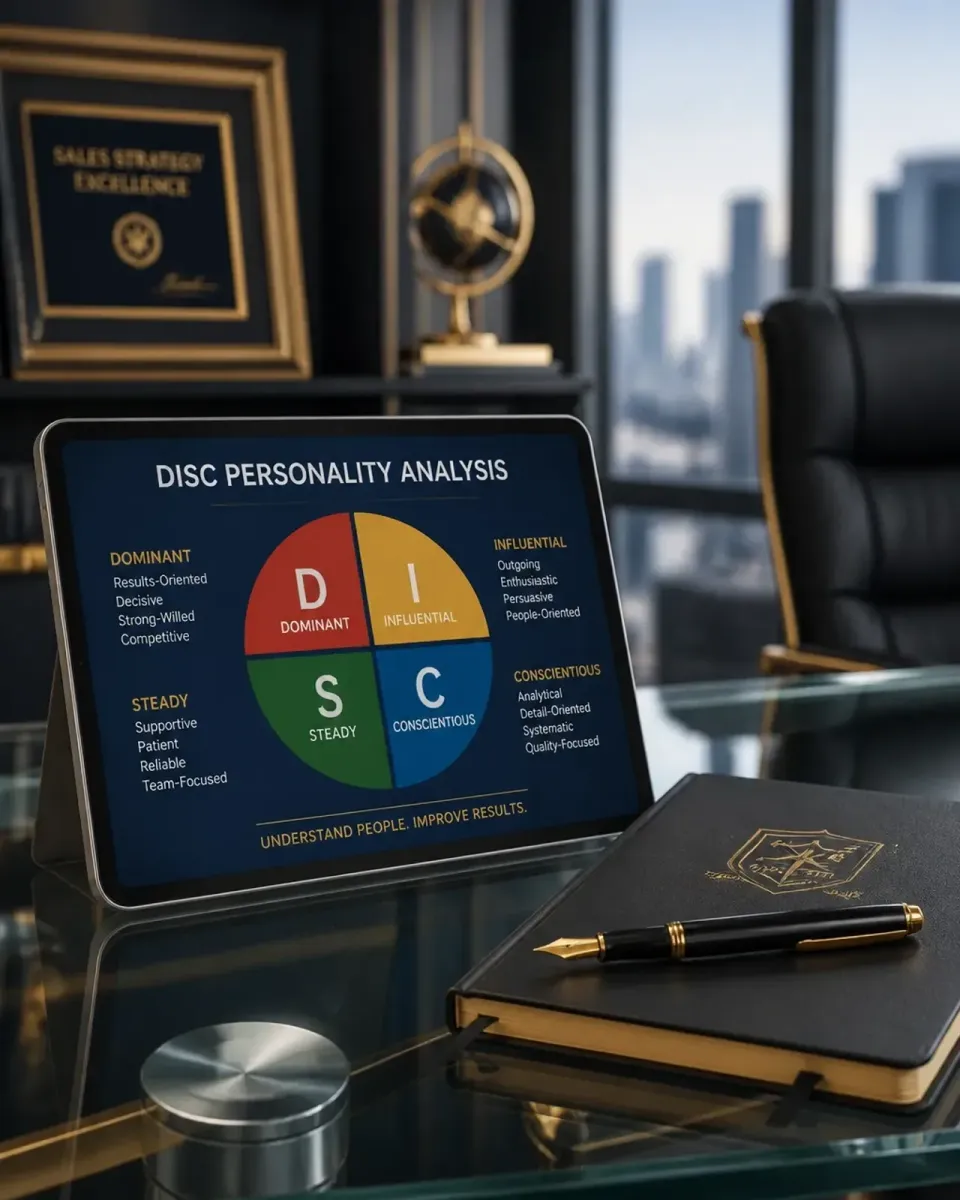
The greatest mistake in sales is using a "one-size-fits-all" response. Price is relative to value, but value is perceived differently by every personality type. Using the DISC system, we can prescribe the exact "word-for-word" response needed to close the deal.

1. THE D-TYPE (DOMINANT): THE ROI CHALLENGE

When a D-type says "Too expensive," they are challenging your logic. They care about speed, results, and the bottom line.

  • The Invitation: "Show me how this makes me money faster than the alternative."
  • The Prescription: Frame the price as a strategic investment. Highlight the cost of inaction.
  • The Script: "Too expensive compared to what? Continuing to lose $50k annually while your competitors move ahead? This isn't an expense; it’s a strategic investment that pays for itself in six months. What's actually expensive is NOT solving this problem today."

2. THE I-TYPE (INFLUENTIAL): THE EMOTIONAL SUPPORT

An I-type objects because they fear the social or emotional risk of a bad decision. They want recognition and team impact.

  • The Invitation: "Make me feel safe and show me how this helps my people."
  • The Prescription: Focus on emotional relief and provide tools to help them "sell" the decision to others.
  • The Script: "I hear you. Budget is real. But think about the impact on your team’s morale and collaboration. You deserve to move past this stress. I’ll even provide a one-page ROI summary to help you explain this to your partners so you have the support you need."

3. THE S-TYPE (STEADY): THE SECURITY BLANKET

S-types are risk-averse. "Too expensive" usually means "I’m afraid this won't work and I'll be left alone with a mess."

  • The Invitation: "Prove to me that you will be there to catch me if I fall."
  • The Prescription: Emphasize partnership, stability, and low-risk entry points like payment plans.
  • The Script: "I completely understand. This is a significant decision. That’s why we don't just hand you a program and leave. We are partnering with you every step of the way. If we structured this as a monthly payment to maintain your cash flow, would that give you the security you need to start?"

4. THE C-TYPE (COMPLIANT): THE DATA DIVE

A C-type has done the math, and something doesn't add up in their spreadsheet. They need precision.

  • The Invitation: "Show me the data and the logic behind the numbers."
  • The Prescription: Use spreadsheets, case studies, and Net Present Value (NPV) calculations.
  • The Script: "That’s a fair concern. Let’s look at the data. Based on your current metrics, here is the implementation cost versus the 5-year NPV of $187k. Here is the breakdown of exactly where every dollar goes. Would you like to see the detailed financial model?"

![A sophisticated, clean graphic displaying the four DISC personality quadrants: Dominant, Influential, Steady, and Compliant: in a professional style with deep blue and gold accents. Each quadrant features icons representing ROI, Team, Security, and Data.](https://cdn.marblism.com/media-library/A-sophisticated-clean-graphic-displaying-the-four-DISC-personality-quadrants: Dominant-Influential-Steady-and-Compliant: in-a-professional-style-with-deep-blue-and-gold-accents.-Each-quadrant-features-icons-representing-ROI-Team-Security-and-Data.-1716912001000.webp)


THE 5 PILLARS OF DIAGNOSIS: FINDING THE ROOT CAUSE

Objection handling is actually diagnostic work. At The Predictable Sales Method, we use the 5 Pillars to identify exactly where the certainty is leaking:

  1. The Seller: Do they trust your authority?
  2. The Buyer: Do you actually understand their deep-seated problem?
  3. The Product: Does the solution fit the need perfectly?
  4. The Price: Does the value outweigh the cost?
  5. The Timing: Is there a reason to act now?

If you hit a wall, it’s usually because one of these pillars is weak. By treating the objection as an invitation to revisit a pillar, you regain control of the narrative. Mastery isn't about having a "slick" comeback; it's about having a comprehensive system that makes the "Yes" inevitable.


MASTER THE ART OF THE CLOSE

Stop fearing the "No." Every objection is a signal that your prospect is engaged and looking for a reason to trust you. When you use psychology-backed techniques to tailor your response to their DISC type, you don't just close a sale: you build a long-term professional partnership.

Are you ready to move away from guesswork and adopt a precise, science-backed approach to your sales process?

Unlock the 11-Step Predictable Sales Model and transform your results today.

TAKE ACTION NOW:

  • Download the FREE DISC Cheat Sheet: Start predicting your buyer's behavior before you even hop on the call.
  • Join our Weekly Mentoring: Get live coaching from Dr. Rick Ruperto to refine your scripts and handle your toughest objections in real-time.
  • Skip the Line: Ready for a radical transformation? Book your strategy session now.

A group of seven professional individuals standing side by side facing a beautiful golden sunset, raising their arms in celebration of shared success and unity. This represents the breakthrough results achieved through The Predictable Sales Method.


BOOK A CALL WITH DR. RICK RUPERTO NOW

Comments

Leave a Reply

Your email address will not be published. Required fields are marked *